Artificial intelligence is changing how people work, communicate, develop software, and access digital services. Behind these innovations is a growing demand for powerful computer chips capable of processing enormous amounts of data quickly and efficiently.
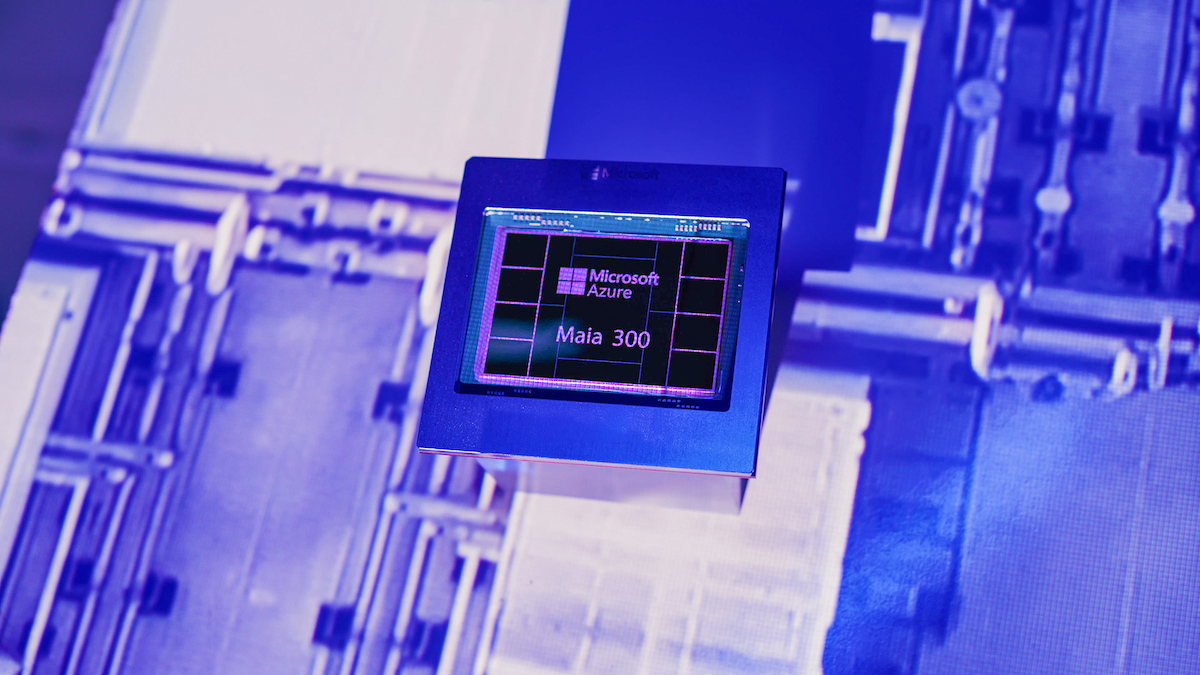
On October 12, 2026, Microsoft announced its next-generation custom AI accelerator, the Azure Maia 300, alongside plans to expand its Azure Maia infrastructure to multi-gigawatt deployments beginning in 2027. The announcement represents another major step in Microsoft’s effort to develop the hardware needed to power its growing portfolio of AI products and cloud services. Microsoft’s official announcement.
The new chip is designed primarily for AI inference — the process through which trained AI models generate answers, produce content, assist with coding, and complete other tasks.
Microsoft says Maia 300 is expected to deliver 40% more tokens per megawatt than the systems it compares against, while a rack-scale deployment could achieve up to seven times the token throughput of the previous Maia 200 generation. These are company-reported expectations, not a guarantee that every AI application will experience the same improvement. Microsoft News.
So, what makes Microsoft Maia 300 important? How could it affect AI services, data centres, businesses, and the wider chip industry?
Here is everything you need to know.
What Is the Microsoft Maia 300 AI Chip?
The Microsoft Maia 300 is a custom AI accelerator developed for Microsoft’s Azure cloud infrastructure.
Unlike a general-purpose processor designed to handle a broad range of computing tasks, an AI accelerator is built to perform the mathematical operations required by machine-learning systems efficiently.
These operations are central to the way large language models and other AI systems process information.
Microsoft’s Maia family is part of its broader strategy to design computing hardware, software, networking, and data-centre systems together. The goal is to improve how efficiently AI workloads run across Microsoft’s infrastructure.
The Maia 300 is the next generation in this programme. Microsoft says the chip is designed to support increasingly demanding AI workloads, including long-context reasoning, responsive conversational applications, and multi-step AI agents.
AI agents are systems that can carry out sequences of actions toward a goal, rather than simply returning a single answer to a question.
For example, an AI agent might help a developer investigate a software problem, review relevant files, suggest a solution, and assist with testing. Such workflows can require repeated model interactions and sustained computing resources.
Maia 300 is designed to help Microsoft support these workloads at scale.
Key Features of Microsoft Maia 300
1. Designed for AI inference
One of the most important aspects of Maia 300 is its focus on inference.
AI training involves teaching a model using large datasets. Inference happens when that model is used to perform a task, such as answering a question, summarising a document, generating an image, or writing computer code.
As AI services reach more users, inference becomes a major part of the computing demand.
Microsoft operates services that can generate millions of AI responses across different products and business applications. Improving the efficiency of each interaction can help the company serve more requests with its available computing resources.
Maia 300 is designed around this challenge.
Rather than treating the chip as an isolated component, Microsoft is developing a complete system that combines processors, memory, networking, and software optimisation.
2. Up to 40% more tokens per megawatt
Microsoft says Maia 300 is expected to process 40% more tokens per megawatt than leading GPU-based systems used for comparison in its announcement.
A token is a unit of text or other information processed by an AI model. Depending on the model and language, a token might represent part of a word, a whole word, or another piece of information.
The tokens-per-megawatt measurement connects AI processing capacity with electricity consumption.
If a system can process more tokens using the same amount of power, it may improve the efficiency of AI infrastructure.
However, actual results depend on the AI model, workload, software configuration, and the hardware used for comparison. Microsoft’s figure should therefore be understood as a reported performance target, rather than a universal benchmark for every task.
3. Up to seven times the token throughput of Maia 200 at rack scale
Microsoft also says Maia 300 systems could deliver up to seven times the token throughput of Maia 200 when measured at rack scale.
A server rack is a structure that houses computing equipment in a data centre. Large AI deployments can connect many accelerators within a rack and across multiple racks.
The comparison matters because modern AI services often depend on entire systems rather than one chip operating alone.
Higher throughput could allow Microsoft’s infrastructure to handle more simultaneous AI requests or larger workloads, depending on how the systems are configured and used.
The comparison is specifically about rack-scale throughput. It should not be interpreted as proof that one Maia 300 chip is seven times faster than one Maia 200 chip in every task.
4. Multi-chiplet architecture
Microsoft describes Maia 300 as using a multi-chiplet architecture that separates computing functions, memory-controller functions, and input/output functions.
A chiplet design divides parts of a processor into smaller functional components that are connected to work as a larger system.
This approach can give chip designers more flexibility when balancing performance, manufacturing costs, and power efficiency.
Microsoft says its compute chiplets use TSMC’s N2P manufacturing process. The architecture is part of a broader effort to improve performance per watt and make the system more suitable for large-scale AI workloads.
The real-world benefit will depend on how effectively the chiplets communicate, how the software schedules work, and how efficiently the overall system uses memory and power.
5. High-bandwidth memory and networking
AI accelerators need to move large quantities of data between processors and memory. When data cannot be delivered quickly enough, even a powerful chip can spend valuable time waiting.
Microsoft’s Maia 300 system combines high-bandwidth memory with high-speed communication between accelerators.
According to Microsoft’s technical announcement, a Maia 300 rack system is designed to contain 96 accelerators within a 167-kilowatt power envelope, with 27.6 terabytes of HBM capacity and 1.7 petabytes per second of aggregate HBM bandwidth across the high-speed scale-up domain.
These are system-level specifications. They describe the planned rack configuration rather than the capacity or bandwidth of an individual chip.
The combination of memory and networking is important because large AI workloads often require several accelerators to cooperate on the same task.
How Could Maia 300 Improve Microsoft Copilot and Other AI Services?
Microsoft’s custom AI chips are intended to support its own products and cloud infrastructure.
The company has said its Maia programme will expand across its AI services, with Maia 200 already serving production workloads, including Microsoft Copilot. Microsoft also identifies GitHub Copilot, Microsoft Foundry, Teams, and Dragon Copilot as areas that could benefit from its evolving AI infrastructure. Source: Microsoft.
Microsoft Copilot
Copilot helps users draft content, summarise information, analyse data, and perform tasks within supported Microsoft products.
A more efficient inference system could help Microsoft serve a greater volume of requests while managing the energy and infrastructure costs associated with those interactions.
However, Maia 300 is not itself a new version of Copilot. It is a hardware platform intended to support the infrastructure behind AI services.
GitHub Copilot
GitHub Copilot assists developers with writing, understanding, and debugging code.
Coding assistants can generate repeated model requests as developers ask questions, accept suggestions, revise code, and investigate errors.
Improved infrastructure could help support these workloads. The actual experience will still depend on the model, software integration, service configuration, and availability of the new hardware.
Microsoft Foundry
Microsoft Foundry provides tools and infrastructure for building and deploying AI applications.
Custom accelerators could give Microsoft more flexibility in how it runs supported models and workloads in Azure.
For businesses, the practical impact will depend on which models and deployment options Microsoft makes available, along with pricing, regional capacity, and compatibility.
Microsoft Teams and other AI-powered tools
AI features in collaboration and workplace applications can involve summarisation, transcription, content generation, and conversational assistance.
More efficient infrastructure may help support these capabilities at scale. Nevertheless, it is too early to conclude that every user will immediately experience faster responses or new features because Maia 300 has been announced.
The chip’s production rollout is planned for 2027.
Microsoft Maia 300 vs Nvidia AI Chips
Nvidia is a major supplier of GPUs used to train and run AI models. Its hardware and software ecosystem plays an important role in the AI industry.
Microsoft’s Maia programme reflects a growing trend among large technology companies: developing custom processors for specific workloads instead of relying exclusively on general-purpose accelerators purchased from outside suppliers.
| Feature | Microsoft Maia 300 | Nvidia AI GPUs |
|---|---|---|
| Primary role | Custom accelerator designed for Microsoft’s AI inference infrastructure | GPUs used across AI training, inference, and other computing workloads |
| Main deployment strategy | Designed for integration with Azure and Microsoft’s services | Used by cloud providers, businesses, researchers, and AI developers |
| Hardware approach | Custom-designed chip and system architecture | Product-specific GPU architectures and associated systems |
| Software environment | Microsoft’s Maia software and Azure infrastructure | Nvidia’s CUDA ecosystem and related AI software |
| Availability | Production deployment planned for 2027 | Depends on the particular GPU model, supplier, and deployment |
| Key consideration | Potential efficiency and integration advantages for Microsoft’s workloads | Broad ecosystem, availability, workload support, and performance |
The comparison requires care. Maia 300 and Nvidia GPUs are not interchangeable in every situation, and the best option depends on the model, software framework, workload, and system configuration.
Microsoft’s custom chip does not mean the company will immediately stop using Nvidia hardware. Different accelerators can serve different workloads, and cloud providers may continue to use multiple hardware platforms.
The broader competition is about performance, power consumption, availability, software support, and the cost of running AI at scale.
Why Microsoft Is Building Its Own AI Chips
1. Greater control over infrastructure
Developing custom chips gives Microsoft more influence over the design of the hardware used in its data centres.
This can help the company coordinate its processors with its cloud services, AI models, networking systems, and software.
It also provides an opportunity to optimise hardware for the tasks Microsoft performs most frequently.
2. Managing AI computing costs
Running large AI services requires significant investment in computing hardware, electricity, cooling, networking, and facilities.
If custom accelerators can deliver more useful AI processing per unit of power or cost, they could improve the economics of providing AI services.
That outcome is not automatic. Chip development, manufacturing, deployment, and software optimisation also require substantial investment.
3. Improving energy efficiency
AI data centres consume considerable electricity, and demand can increase as more people and businesses adopt AI tools.
Microsoft’s reported goal of increasing tokens processed per megawatt is directly connected to this challenge.
Better efficiency could help the company serve more requests within a given power budget. It could also reduce the amount of energy needed for a fixed workload if the system performs as expected.
Actual environmental benefits will depend on overall usage, data-centre efficiency, cooling, and the electricity sources used.
4. Reducing dependence on a single supplier
A custom chip programme can provide more options when planning AI infrastructure.
This does not eliminate reliance on external suppliers. Advanced chip manufacturing, memory, packaging, networking components, and other technologies remain part of a complex global supply chain.
Nevertheless, designing its own accelerators gives Microsoft another way to tailor its computing infrastructure to its needs.
What Could Microsoft Maia 300 Mean for Businesses?
Businesses do not necessarily need to buy Maia 300 chips directly to benefit from improvements in Microsoft’s infrastructure.
If Microsoft deploys the chips successfully and makes the resulting capacity available through its services, organisations using supported Azure and Microsoft AI products could potentially benefit from improvements in service efficiency or capacity.
Possible areas of impact include:
- Customer support: AI assistants could help businesses respond to more customer enquiries.
- Software development: Coding assistants could support developers with code generation, debugging, and documentation.
- Business productivity: AI tools could help employees summarise documents, analyse information, and prepare content.
- AI application development: Cloud infrastructure could give developers additional options for deploying supported models.
- Enterprise automation: AI agents could support multi-step workflows involving several connected tasks.
These are potential outcomes, not guaranteed benefits from the chip announcement alone.
Businesses should evaluate actual service availability, pricing, performance, data protection, and reliability before changing their AI infrastructure plans.
Is Microsoft Maia 300 Available Now?
Microsoft announced Maia 300 in October 2026, but the chip is not yet generally available as a product that businesses can purchase and install in their own computers.
Microsoft says production deployments are planned to begin in 2027. The company also intends to expand its Azure Maia infrastructure to multi-gigawatt deployments beginning that year. Microsoft’s official announcement.
For now, organisations interested in Microsoft’s AI infrastructure should monitor official Azure announcements for details about service availability, supported workloads, deployment regions, and commercial terms.
Consumers should also understand that Maia 300 is a data-centre accelerator, not a consumer graphics card designed to be installed in a gaming PC or standard desktop computer.
What Are the Challenges Facing Microsoft’s Maia 300?
Despite its potential, Maia 300 faces several important challenges.
Manufacturing and supply constraints
Advanced AI chips require specialised manufacturing processes, packaging technologies, memory, and other components.
Production capacity and component availability can affect how quickly a new accelerator can be deployed at scale.
Software compatibility
A processor’s usefulness depends partly on whether AI models and applications can run efficiently on it.
Microsoft must continue developing the software, compilers, tools, and integrations needed to make Maia suitable for its intended workloads.
Power and cooling requirements
AI accelerators can consume substantial electricity, especially when deployed in large clusters.
Microsoft’s stated rack power envelope illustrates why power delivery, cooling, and data-centre design are important parts of the project.
Demonstrating performance in real workloads
Manufacturer benchmarks help explain a chip’s intended advantages, but independent testing and real-world deployments provide additional evidence.
The reported 40% efficiency improvement and up-to-seven-times rack throughput comparison should be assessed alongside the workloads, configurations, and baselines used for those measurements.
Competition from established hardware providers
Nvidia and other chip companies continue to develop accelerators for AI workloads.
Microsoft will need to demonstrate that its custom hardware offers practical advantages in its target environments, while maintaining compatibility and service quality.
What Happens Next?
The next major milestone is the planned production deployment of Maia 300 in 2027.
As deployment progresses, the most important developments to watch will include:
- The scale and timing of production deployments.
- Independent performance results and workload-specific benchmarks.
- The availability of supported Azure services and AI models.
- The cost and efficiency of running AI workloads on the new system.
- Whether Microsoft expands the use of Maia beyond its own internal services.
- How competing AI chip providers respond with their own hardware and infrastructure improvements.
These developments will help establish whether Maia 300 can deliver its intended benefits outside Microsoft’s announced performance targets.
Conclusion: A Significant Development in the AI Hardware Race
Microsoft Maia 300 represents an important step in the development of custom AI infrastructure. Rather than relying entirely on external processors, Microsoft is building an accelerator designed to work closely with its cloud services, software, networking, and AI workloads.
The company’s stated targets — including 40% more tokens per megawatt and up to seven times the rack-scale token throughput of Maia 200 — highlight the importance of efficiency as AI adoption expands.
However, the real significance of Maia 300 will depend on production deployment, software support, workload performance, and the economics of operating it at scale.
For businesses, developers, and technology enthusiasts, the key takeaway is that the AI race is not only about building better models. It is also about developing the infrastructure required to deliver those models efficiently and reliably.
As planned deployments approach in 2027, Microsoft’s Maia programme will be an important development to follow in the wider competition to power the next generation of artificial intelligence.
Frequently Asked Questions (FAQs)
1. What is Microsoft Maia 300?
Microsoft Maia 300 is a custom AI accelerator designed for Microsoft’s Azure infrastructure. It is intended to support AI inference workloads, including conversational AI, long-context reasoning, and multi-step AI agents.
2. When will Microsoft Maia 300 be released?
Microsoft has announced Maia 300, with production deployments planned to begin in 2027. This does not mean the chip is currently available for general purchase.
3. How powerful is Microsoft Maia 300?
Microsoft says Maia 300 is expected to deliver 40% more tokens per megawatt than the GPU-based systems used in its comparison. At rack scale, Microsoft expects up to seven times the token throughput of Maia 200. These figures depend on the comparison and workload.
4. Is Microsoft Maia 300 better than Nvidia GPUs?
There is no universal answer. Maia 300 is designed for Microsoft’s AI infrastructure, while Nvidia GPUs serve a broad range of training and inference workloads. Performance depends on the specific hardware, model, software, and task.
5. Will Maia 300 make Microsoft Copilot faster?
The chip is intended to improve the infrastructure behind Microsoft’s AI services. It could help support greater capacity or efficiency, but the announcement alone does not guarantee that every Copilot feature will become faster for every user.
6. Can I buy Microsoft Maia 300 for my computer?
Maia 300 is designed for data-centre infrastructure, not as a typical consumer graphics card or desktop processor. Microsoft has announced planned production deployments beginning in 2027.
7. Why is Microsoft developing its own AI chips?
Custom chips can give Microsoft greater control over hardware design and integration, and may improve efficiency and infrastructure economics for workloads that fit the architecture.
8. What is AI inference?
AI inference is the process of using a trained AI model to produce an output, such as an answer, summary, code suggestion, or prediction. Maia 300 is designed primarily to support this phase of AI computing.
9. Does Maia 300 use Nvidia technology?
Maia 300 is Microsoft’s custom accelerator programme. Microsoft has not announced that it will stop using Nvidia hardware; different accelerators can continue to support different workloads.
10. Where can I find official updates about Maia 300?
Start with the official Microsoft announcement and Microsoft’s Maia 300 information page.

Leave a Reply