

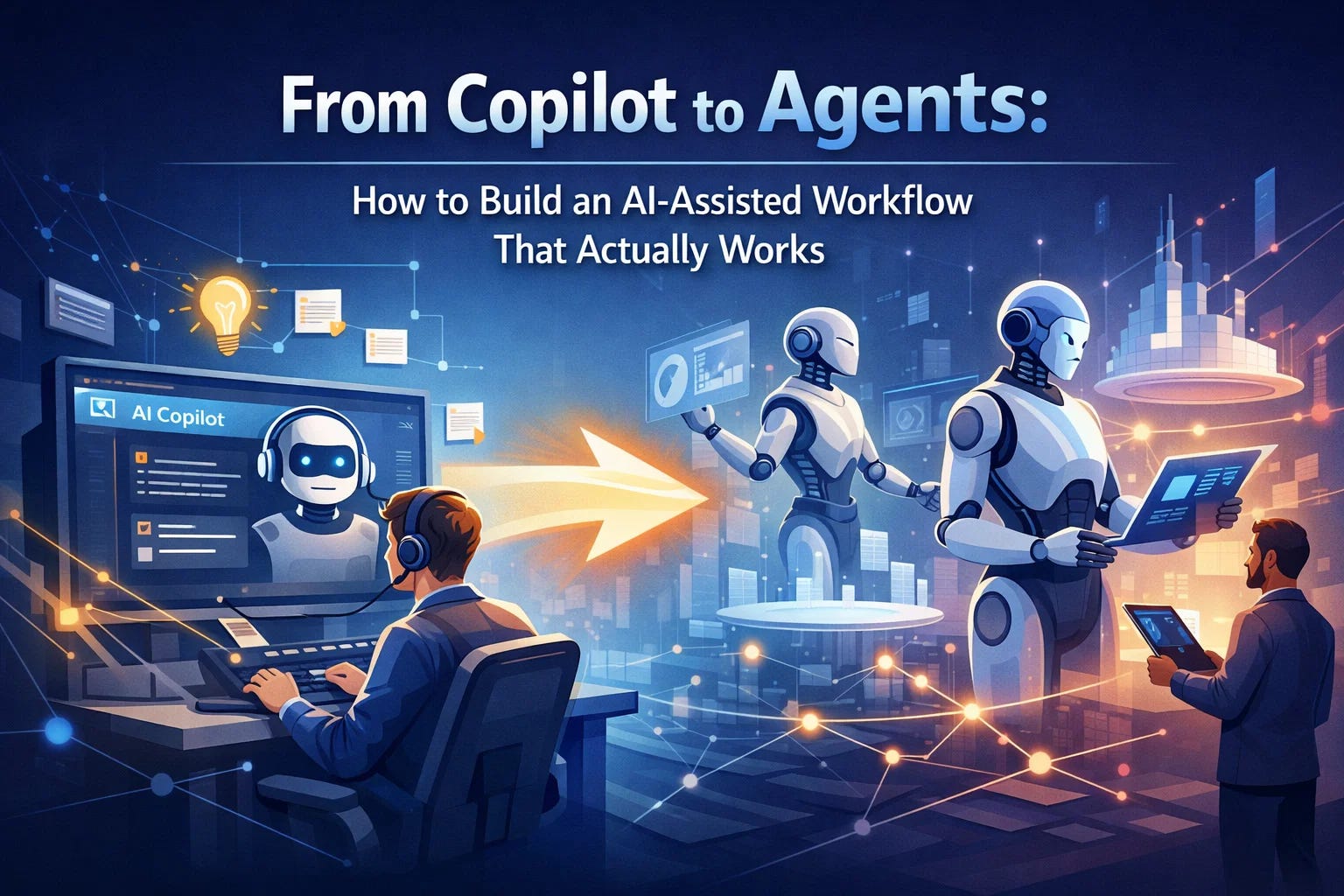
Everyone has a chatbot, but very few companies have actually deployed an autonomous AI Agent workforce. According to recent data from Deloitte, while nearly 40% of tech teams are piloting agents, only 11% have successfully pushed them into active production.
The issue isn’t the technology; it’s the approach. If you automate a broken, disorganized workflow, you just get broken processes faster. Here is how to build and scale a human-agent team properly this year.
Step 1: Isolate End-to-End Processes (Not Pain Points)
Don’t build an AI agent just to answer single emails. Look for modular, multi-step workflows. Excellent candidates include:
- Automated Financial Reporting: Pulling data, compiling the spreadsheet, checking for anomalies, and drafting the summary.
- Continuous Code Review: Scanning commits, cross-referencing documentation, running test suites, and suggesting fixes autonomously.
Step 2: Choose Your Multi-Agent Framework
To get agents to work together seamlessly, you shouldn’t rely on simple prompt chaining. Use dedicated AI-native development platforms. The current industry gold standards include:
- CrewAI / AutoGen: Excellent for establishing specific roles (e.g., an “Editor” agent reviewing a “Writer” agent’s output).
- LangGraph: Ideal for complex, cyclical agent workflows where human-in-the-loop approval is required before a final action is taken.
Step 3: Shift Architecture to Strategic Hybrid Computing
Running autonomous agent fleets 24/7 on pure cloud architectures will drain your budget rapidly. The top 1% of tech teams are utilizing a Strategic Hybrid Strategy:
| Task Type | Hosting Environment | Reason |
| Model Elasticity & Training | Public Cloud | Scalability on demand |
| Consistent Daily Agent Workloads | On-Premises / Private Cloud | Predictable data costs |
| Immediate Local Actions | Edge Computing | Low latency |
